Samsung Electronics · Gear VR global launch
Samsung Gear VR: setup and multi-device UX
Cut the first-time setup of Samsung's VR headset from 13 steps to 5, and designed the 3D interaction patterns that let one experience move between the headset and the phone for a global audience of first-time users.
- Role
- Senior UX designer, individual contributor; mentored junior designers
- Team
- Researchers, product managers, and engineers across the VR and mobile teams
- Timeline
- Gear VR global launch
- Stack
- Headset and phone; 3D layout and interaction principles; localization for the global launch
The problem
Samsung's VR headset was going to first-time users all over the world, and the first thing they met was a setup that ran across two devices. Thirteen steps, split between the headset and the phone, with no clear handoff between them. The 2D patterns the mobile team had relied on for years did not translate: a list that reads fine on a phone is unreadable at arm's length in a headset, and a tap has no equivalent when your hands are not on the screen.
My job was to define how the product should feel in 3D, keep it continuous with the phone, and get people through setup before they gave up.
What I did
- Set the foundational 3D interaction principles and layout. Where content sits in the field of view, how far away it is, how it responds to gaze and the touchpad. These became the patterns the rest of the team built on.
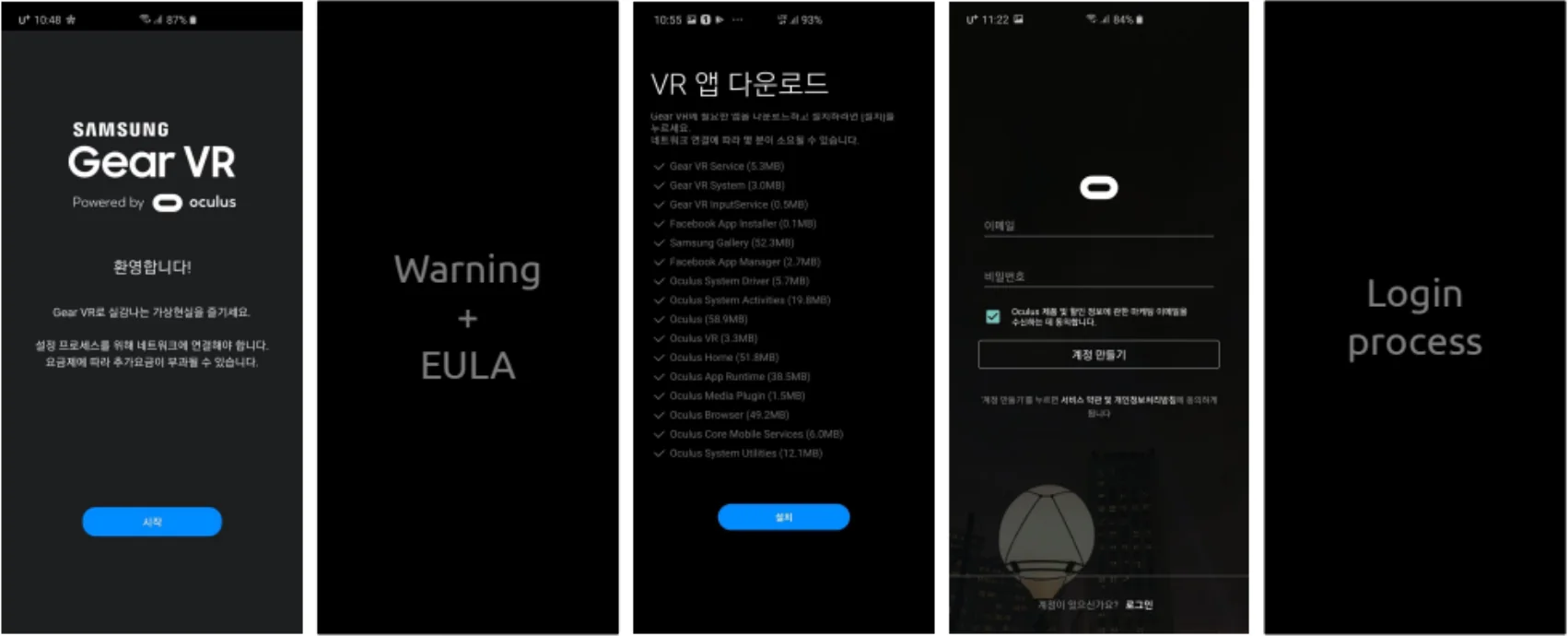
- Redesigned the setup as one flow across two devices. The headset and the phone each do the part they are good at, and the handoff tells you exactly where to look next. Thirteen steps became five.
- Made the patterns reusable. The interaction model had to survive different headsets and phones, so it was written down as patterns, not screens.
- Ran design workshops with researchers, product managers, and engineers to generate and validate alternatives, and mentored the junior designers on the team.
- Localized the experience for the global launch, including the Korean and English flows shown here.

Results
First-time engagement and retention went up with the shorter setup, and the interaction patterns gave the team its footing for the move from 2D mobile UX to multi-device immersive products. The headset sold 7M units in its first quarter, and two international patents came out of the work.
What I took from it
Hardware is the brief, not the obstacle. The designs that respected the headset's field of view and the phone's role shipped; the ones that tried to make a headset behave like a phone were the ones we cut. I have used the same approach since on watches, TVs, and iOS alarm rules.